The Journal·June 5, 2026
How to Plan Meaningful Experiences as a Long-Term Couple
By Meet Me Here

Intentional experience planning is the practice of deliberately designing shared activities that build emotional depth, novelty, and growth between partners over time. Couples who plan together fight less, feel more connected, and reduce misunderstandings about shared goals. That outcome is not accidental. It is the direct result of treating your relationship as something worth scheduling, designing, and reflecting on. If you and your partner are in a long-term relationship and feel the pull of routine, this guide gives you a practical system to plan meaningful experiences that actually stick.
What frameworks help you plan meaningful experiences as a long-term couple
The most effective tools for couples are not grand gestures. They are repeatable structures that reduce friction and make intentional connection a default, not an exception.
The micro-season framework
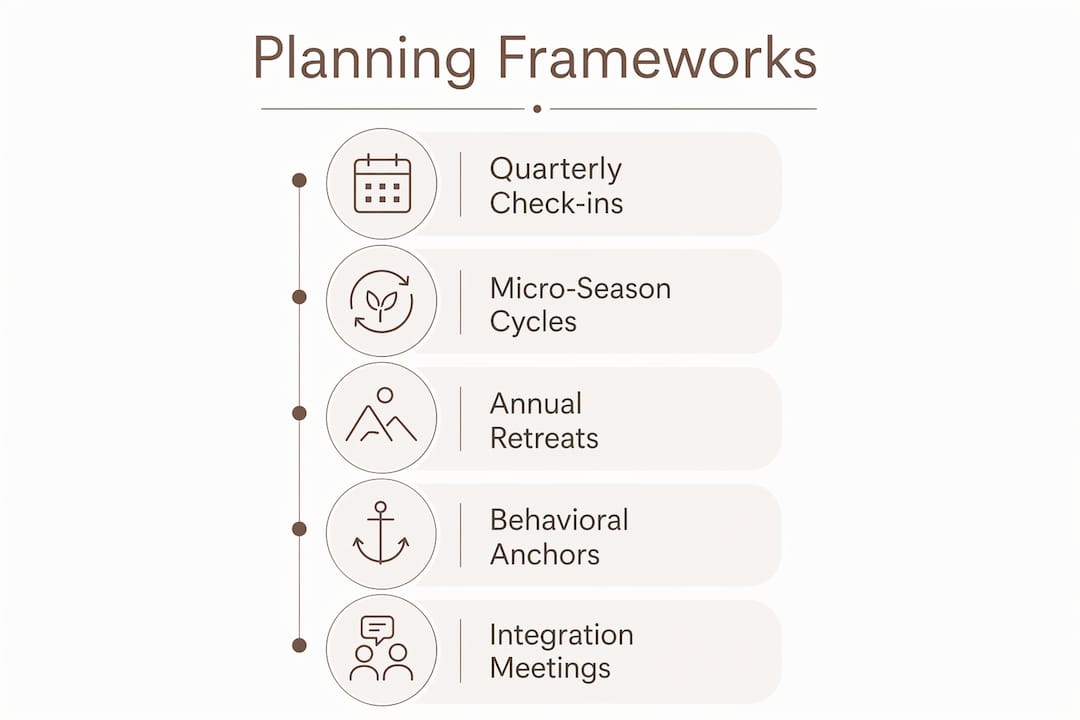
The micro-season framework links each shared trip or experience to practicing one specific relationship skill, followed by 15 minutes of nightly practice over 30 days. One experience equals one skill. This is significant because it transforms a weekend away from a pleasant memory into a measurable growth cycle. Instead of returning home and slipping back into old patterns, you and your partner carry a concrete behavioral commitment forward.

Quarterly check-ins and annual retreats
Quarterly check-ins timed after holidays reduce conflict and sharpen alignment between partners. The post-holiday window works because both people are already in a reflective mindset, and the pressure of the season has lifted. Annual retreats go deeper. Couples’ strategic retreats held outside home environments shift the nervous system away from daily routines, which makes honest communication and big-picture dreaming significantly easier. A cabin, a rented cottage, or even a coffee shop in a different neighborhood can serve this function.
Here is a comparison of the three main planning frameworks to help you choose the right starting point:
| Framework | Best for | Time investment | Key benefit |
|---|---|---|---|
| Micro-season skill cycle | Couples wanting structured growth | 1 trip + 30 days of practice | Turns experiences into lasting habits |
| Quarterly check-in | Couples with busy schedules | 2 to 3 hours per quarter | Reduces conflict and realigns goals |
| Annual couples retreat | Couples ready for deep planning | 3 to 4 days per year | Big-picture vision and honest communication |
Pro Tip: Start with the quarterly check-in if you have never done structured planning before. It requires the least logistical lift and delivers fast, visible results in communication quality.
How to select activities that actually deepen your bond
Not every shared activity creates lasting memories. The ones that do share three qualities: novelty, shared challenge, and personal meaning. Novel, challenging shared activities boost bonding and attraction, which is validated by self-expansion psychological models. This means the activity does not need to be expensive. It needs to push both of you slightly outside your comfort zone together.
Follow these steps to design experiences with real emotional impact:
-
Identify your relationship’s current growth edge. Are you working on communication, playfulness, physical connection, or shared vision? Name it before you plan anything.
-
Match the activity to that edge. If you want more playfulness, choose a creative project or a cooking class. If you want shared vision, plan a retreat with structured reflection time.
-
Align the experience with your shared values. An activity that contradicts what you both care about will feel hollow. A couple that values nature will get more from a hiking trip than a casino weekend.
-
Use the obituary exercise for clarity. Joy and Matt, the couple behind the Creating an Intentional Marriage framework, advocate writing personal obituaries during retreats to clarify life priorities without pressure or nagging. Each partner writes what they hope their life and relationship will have meant. Then you share. The result is a clear map of what actually matters to each of you.
-
Match scale to your current capacity. Long-term relationship activities do not require international travel. A local day trip, a staycation with a structured agenda, or a weekend at a state park can deliver the same emotional impact as a costly retreat if the intention behind it is clear.
“The goal is not the destination. It is the deliberate act of showing up for each other in a context that is different from your Tuesday night routine.”
Pro Tip: Before booking anything, spend 20 minutes writing down three things you each want to feel more of in your relationship. Let those words guide your activity selection rather than defaulting to what looks good on social media.
How to preserve the impact after the experience ends
The most common mistake couples make is treating a meaningful experience as a finish line. The experience is actually a starting point. Pre-planning with measurable goals, integration meetings, and occasional coaching increases the likelihood that relationship growth outcomes actually take hold after the experience ends.
Here is a practical post-experience integration sequence:
-
Schedule a 20 to 30 minute integration meeting within one week of returning. Sit down together and answer two questions: What shifted for us? What do we want to carry forward?
-
Set one behavioral anchor. Choose one concrete habit you will both practice for 30 days. This could be a nightly check-in question, a weekly walk, or a shared creative prompt.
-
Put recurring events on the calendar. Recurring calendar events like renewal ceremonies and quarterly goals sessions turn values into behaviors and strengthen emotional connection over time. Scheduling removes the reliance on motivation, which is unreliable.
-
Review and adjust at your next check-in. If the habit faded, that is data, not failure. Ask what got in the way and redesign accordingly.
Common momentum killers to watch for:
-
Returning home to an overloaded schedule with no buffer time for reflection
-
Setting vague intentions (“we’ll be more present”) instead of specific behaviors
-
Skipping the integration meeting because life gets busy
-
Treating the experience as a one-time fix rather than part of an ongoing rhythm
Pro Tip: Use a shared digital calendar or a physical journal to log your behavioral anchor and check in on it weekly. Visibility keeps the commitment alive when motivation dips.
When and where to plan your experiences for maximum effect
Timing and environment are not logistical details. They are the conditions that determine whether an experience lands or gets absorbed into the noise of daily life.
Curated couples’ retreats typically last 3 to 4 days and range from $500 to $2,000 or more, with pre-planned anchor activities that reduce decision fatigue. That price range reflects a real spectrum of options. You do not need to spend at the top of it. What matters is removing yourself from your home environment long enough for a genuine shift in perspective.
Key timing and environment principles:
-
Plan after high-stress seasons, not during them. Post-holiday periods work well because both partners have natural space for reflection.
-
Use neutral locations. A home environment triggers habitual roles and distractions. A neutral space, even a local hotel for one night, signals that this time is different.
-
Alternate big and small experiences. Mixing high-novelty trips with smaller local retreats optimizes emotional energy and prevents burnout. A weekend camping trip in March and a longer trip in September is a more sustainable rhythm than one massive annual event.
-
Protect the planning window. Block the time before you agree on the activity. An unscheduled intention is just a wish.
| Experience type | Ideal timing | Approximate cost | Emotional payoff |
|---|---|---|---|
| Local day trip | Any weekend | $50 to $150 | Novelty and reconnection |
| Overnight local retreat | Post-holiday or post-stressful period | $150 to $400 | Reset and honest conversation |
| 3 to 4 day couples retreat | Annually or biannually | $500 to $2,000+ | Deep planning and vision alignment |
Key takeaways
Meaningful experiences in long-term relationships require intentional design, structured follow-up, and a repeating rhythm of small and large shared activities to produce lasting emotional growth.
| Point | Details |
|---|---|
| Start with a framework | Choose quarterly check-ins, micro-season cycles, or annual retreats based on your current capacity. |
| Select activities with purpose | Match experiences to your relationship’s growth edge using novelty, challenge, and shared values. |
| Integrate after every experience | Schedule a 20 to 30 minute debrief and set one 30-day behavioral anchor to preserve impact. |
| Use neutral environments | Retreats outside the home shift communication patterns and make honest planning easier. |
| Build a repeating rhythm | Alternate big and small experiences throughout the year to sustain connection without burnout. |
What I’ve learned from treating couple planning as a practice, not an event
I used to think a great trip would do the work on its own. Book something beautiful, show up, and connection would follow. What I found instead is that the experience without the intention is just tourism. The couples who report the deepest shifts are the ones who arrive with a question they are trying to answer together, not just an itinerary.
The messiest planning sessions have also been the most revealing. When you and your partner sit down to map out what you actually want from the next year of your relationship, disagreements surface fast. That is not a problem. That is the point. The friction in the planning process is often the most honest conversation you will have all month.
What I encourage most is starting before you feel ready. You do not need a perfect framework or a $2,000 retreat. A notebook, two hours, and a willingness to ask “what do we actually want our relationship to feel like?” is enough to begin. The structure can grow from there. The couples I have seen make the most progress are not the ones with the most elaborate plans. They are the ones who show up consistently, even imperfectly, and treat their relationship as something worth returning to with intention.
— Meet Me Here
Tools from Meet Me Here to support your planning
If you are ready to move from intention to action, Meetmehere builds tools designed specifically for this kind of work.
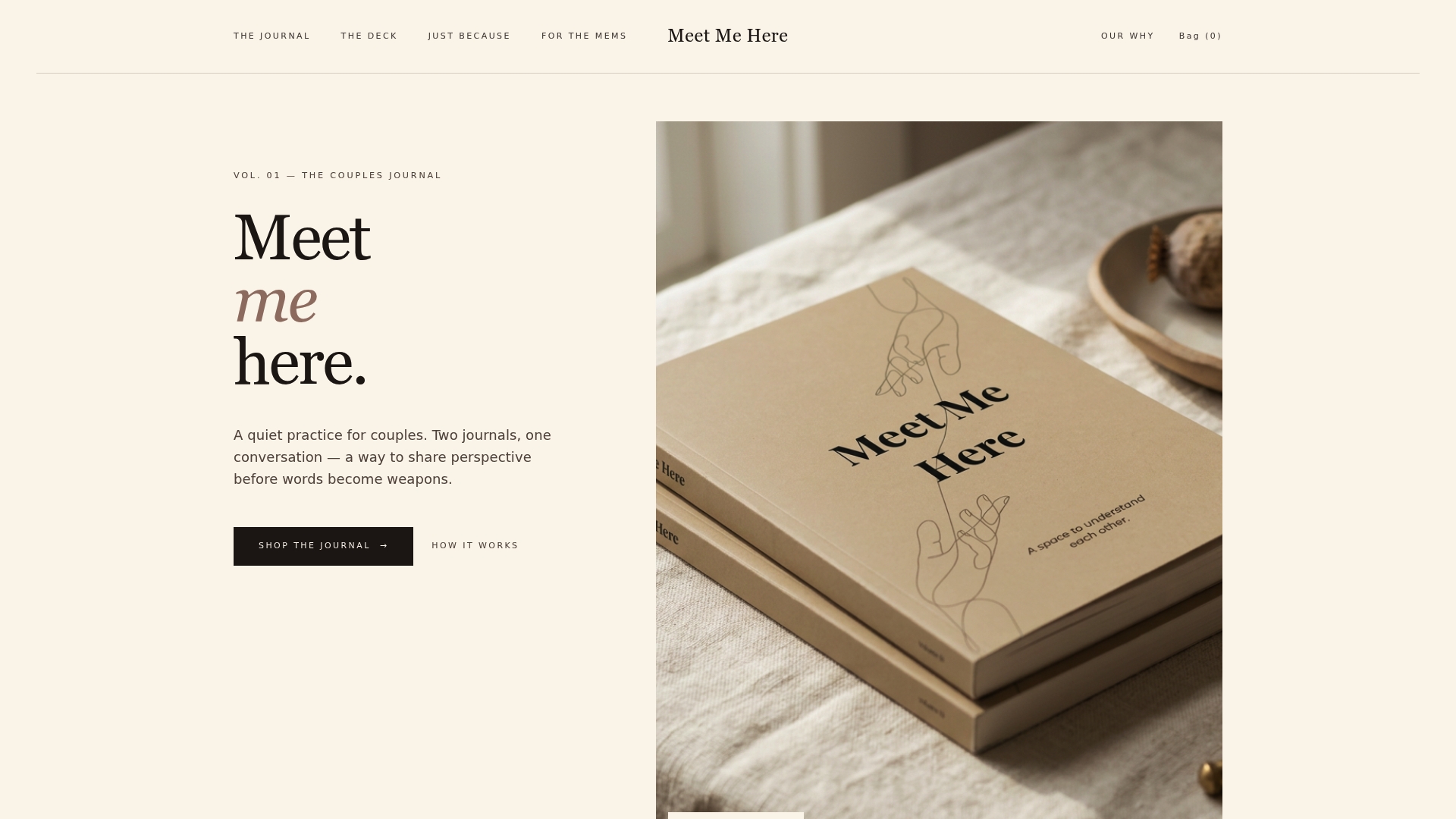
The Meet Me Here Journal gives you and your partner a structured space to work through difficult conversations, reflect on shared experiences, and reconnect with purpose. The Connection Deck offers conversation prompts that spark the kind of depth that typical date nights rarely reach. Just Because Cards make appreciation a daily habit rather than a special occasion. And For the Mems: Sudoku Edition turns a quiet evening into a memory-making session. Every product is built around one idea: that intentional couple connection does not happen by accident. It happens when you create the conditions for it. Explore the full range of tools at Meetmehere and find what fits where you are right now.
FAQ
How often should long-term couples plan meaningful experiences?
A rhythm of one larger annual retreat combined with quarterly check-ins and monthly smaller outings gives couples the best balance of depth and consistency. Quarterly check-ins timed after holidays are particularly effective at reducing conflict and maintaining alignment.
What makes an experience meaningful for a couple?
An experience becomes meaningful when it combines novelty, shared challenge, and personal relevance to the relationship’s current growth edge. Activities that push both partners slightly outside their comfort zone together produce the strongest bonding outcomes.
Do meaningful couple experiences have to be expensive?
No. A local overnight stay, a structured day trip, or even a two-hour planning session at a coffee shop can deliver significant emotional impact. The key variable is intention, not budget. Neutral locations outside the home facilitate honest communication regardless of cost.
How do you maintain the impact of a meaningful experience over time?
Schedule a 20 to 30 minute integration meeting within one week of the experience and set one concrete behavioral anchor to practice for 30 days. Recurring calendar events like monthly check-ins and renewal ceremonies turn the insight from a single experience into a lasting habit.
What is the obituary exercise and how does it help couples plan?
The obituary exercise asks each partner to write what they hope their life and relationship will have meant. Sharing these writings during a retreat clarifies values and priorities without pressure, and gives both partners a clear foundation for choosing experiences that actually align with what matters most to them.